

Buried beneath the fields of northern Germany lies a newly confirmed resource that may become a central pillar of Europe’s energy autonomy. In a region better known for decades-old gas infrastructure, researchers have identified a vast underground brine formation holding unusually high concentrations of lithium — an element increasingly critical to global battery supply chains.
The discovery comes at a time of mounting pressure on Europe to secure access to strategic raw materials. Demand for lithium continues to rise sharply, driven by electric vehicle production, grid-scale energy storage, and portable electronics. The continent’s overreliance on imports from a handful of foreign suppliers has already been flagged as a strategic vulnerability.
Now, a site in Saxony-Anhalt appears to offer Europe a domestic foothold in a market long dominated by South American salt flats and Chinese refiners. Confirmation of the scale and composition of this resource has prompted immediate attention from policymakers, industry observers, and global competitors.
A Deep Reserve Puts Germany on the Lithium Map
In late 2025, Neptune Energy announced that its Altmark Lithium Project had been independently assessed by resource evaluator Sproule ERCE under CIM/NI 43-101 standards. The site, located in the Altmark region of eastern Germany, is estimated to contain 43 million metric tons of lithium carbonate equivalent (LCE) — placing it among the largest known single-site lithium resources globally.
Neptune currently holds one production license (Jeetze-L) and three exploration licenses (Milde A-L, B-L, and C-L) in the area. The site previously served as a major natural gas field for over five decades. Extensive geological and operational data from that period is now being used to support the lithium transition.
At the heart of the resource lies a deep aquifer, located between 3,200 and 4,000 meters below the surface, containing geothermal brines enriched with lithium. The average lithium concentration is approximately 375 milligrams per liter, based on geochemical research presented at the 2025 EAGE Annual Conference.
This enrichment is primarily attributed to the breakdown of lithium-bearing mica minerals embedded within volcanic clasts in the Rotliegend sandstone formation. These minerals have leached lithium into the surrounding groundwater over millions of years, under temperatures exceeding 120°C.
Only a small fraction of the lithium appears to have originated from ancient seawater evaporation. The site’s geological profile, marked by consistent enrichment patterns and secondary porosity from mineral dissolution, supports the feasibility of long-term production.
Testing New Lithium Extraction
Neptune has completed two pilot extraction projects using direct lithium extraction (DLE), a closed-loop technology that isolates lithium from brine and reinjects the processed fluid underground. The most recent pilot, conducted with U.S.-based partner Lilac Solutions, successfully produced battery-grade lithium carbonate using an ion exchange method. A third pilot, launched in September 2025, is now testing an adsorption-based approach.
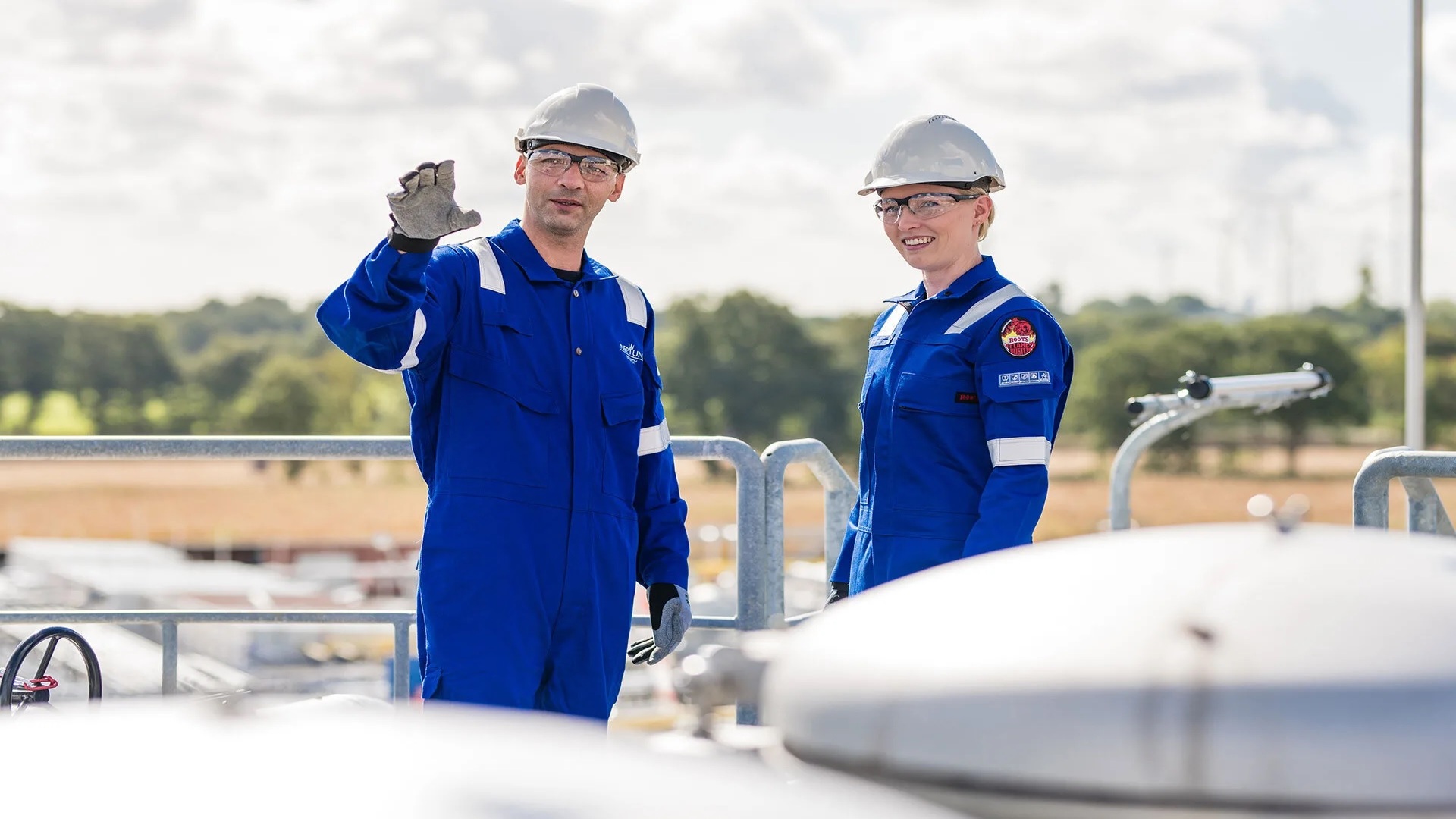
Unlike conventional surface evaporation ponds in South America or hard rock mining in Australia, DLE systems use less water, occupy less land, and have a reduced environmental footprint. The technology is still emerging at industrial scale, but initial results from Altmark show promise for scalability in a high-temperature, high-pressure environment.
The integration of DLE with legacy gas infrastructure in Altmark could also reduce capital costs and environmental impact. Co-production of geothermal energy is under consideration, which would add a secondary energy output from the same extraction process.
Europe’s Lithium Strategy Shifts from Theory to Territory
The Altmark confirmation comes in the broader context of the European Critical Raw Materials Act, adopted in March 2023. This regulatory framework aims to reduce strategic dependencies by requiring that, by 2030, at least:
- 10% of critical raw materials be extracted domestically within the EU
- 40% be processed within the EU
- 15% be sourced through recycling
- No more than 65% of any strategic raw material come from a single third country at any stage of processing
These targets reflect the EU’s long-term goal of securing access to key materials needed for battery manufacturing, renewable energy systems, and defense technologies. Lithium has been specifically designated a strategic raw material, and projects like Altmark are now considered essential to reaching these benchmarks.
To accelerate development, strategic projects within the EU are eligible for fast-tracked permitting, including timelines of 24 months for extraction permits and 12 months for processing and recycling facilities. Neptune has indicated that it plans to enter a demonstration phase following further regulatory approvals.
From Bolivia to Germany: Contrasting Lithium Frontiers
Currently, most of the world’s lithium is extracted from the Lithium Triangle — the high-altitude salt flats spanning Chile, Argentina, and Bolivia. These regions rely heavily on solar evaporation methods, which require up to 500,000 gallons of water per ton of lithium and can take over a year to complete. The environmental and social impacts of such operations have been well documented.
A detailed investigation by the Harvard International Review outlined growing community tensions in Bolivia, where a $1.3 billion joint venture between the government and German company ACI Systems Alemania was canceled following protests in Potosí. In Argentina, local Indigenous leaders have raised concerns over groundwater contamination and inadequate revenue-sharing agreements with foreign operators.
In contrast, Germany’s Altmark project operates in a former industrial zone with a compact environmental footprint. Its closed-loop extraction process significantly reduces water usage and avoids surface disruption. If proven at commercial scale, the project could serve as a model for low-impact lithium production in mature energy regions across Europe.

